

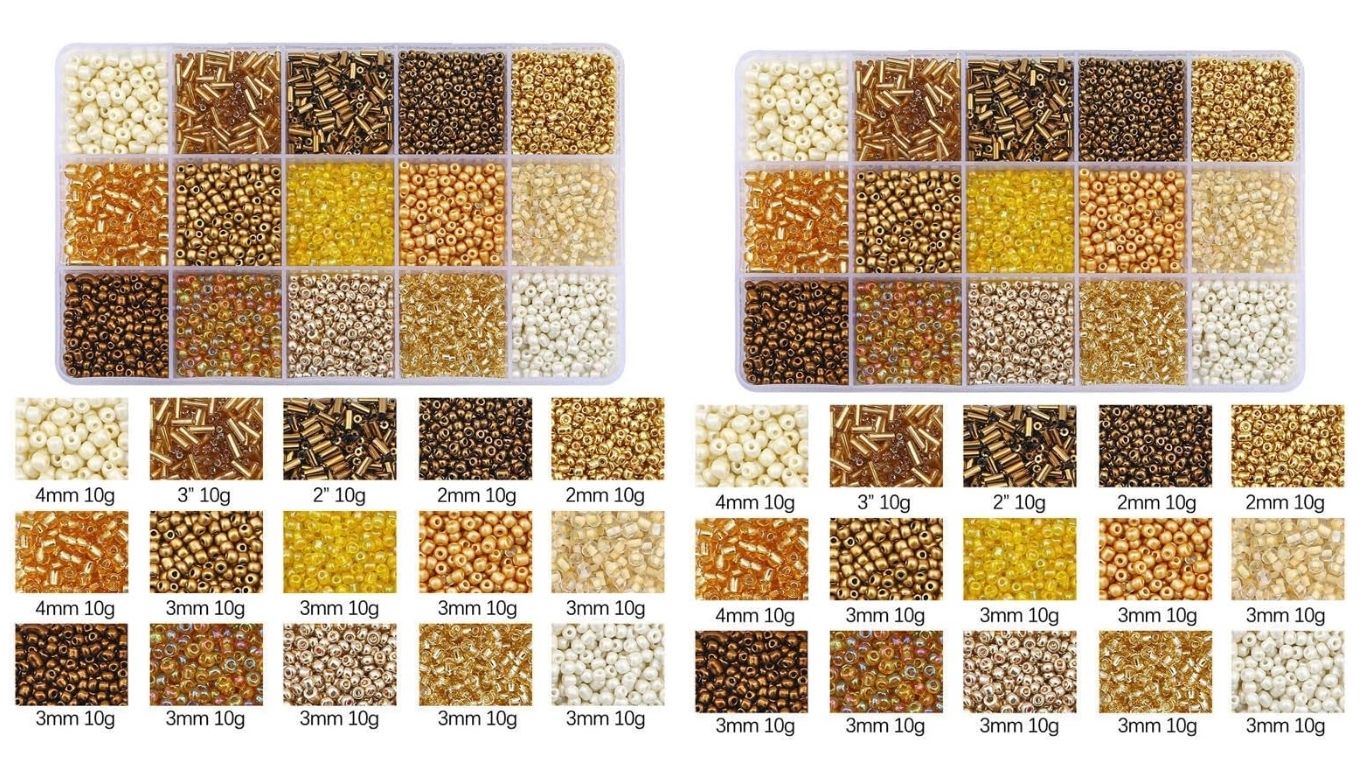
What Are Beads?
Beads are small round or shaped objects with a hole in the center so they can be stitched or threaded. They are made from different materials like glass, plastic, metal, wood, and stone. Beads are widely used in embroidery, jewellery making, clothing decoration, and craft work.
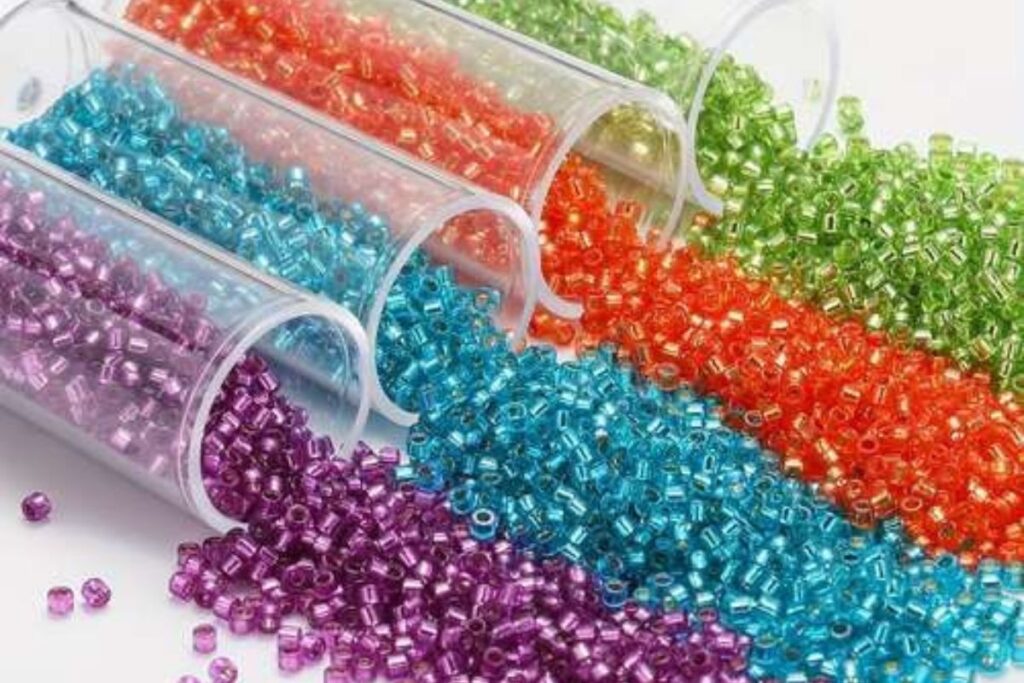
Beads Colours
Beads come in many colours, and choosing the right colour is very important for a perfect design.
- Gold beads – Used for bridal and traditional designs
- Silver beads – Gives a modern and elegant look
- White beads (pearl type) – Perfect for soft and classy designs
- Red beads – Common in wedding blouses and festive wear
- Green beads – Looks rich with silk sarees
- Blue beads – Good for contrast designs
- Black beads – Used for bold and stylish looks
- Multicolour beads – Best for creative and trendy designs
- Transparent beads – Adds a subtle shine
- Matte finish beads – Gives a soft and dull look
- Metallic finish beads – Gives a shiny and grand look
Choosing colours depends on fabric colour, design style, and occasion.
Beads Sizes
Beads are available in different sizes. Size selection is very important for neat finishing and design clarity.
- 1mm beads – Very tiny, used for fine detailing
- 2mm beads – Small size, used for light filling work
- 3mm beads – Commonly used in Aari work for neat designs
- 4mm beads – Slightly bigger, used for highlighting designs
- 5mm beads – Used for bold patterns and borders
- 6mm beads – Suitable for heavy work and standout designs
- 8mm beads – Mostly used in jewellery and heavy embroidery
- 10mm and above – Used for statement designs and accessories
Small beads give a clean and detailed look, while bigger beads give a bold and rich appearance.
Types of Beads
There are many types of beads available, each giving a different look.
- Round beads – Most commonly used in all designs
- Cut beads (faceted beads) – Reflect light and give sparkle
- Tube beads – Long and cylindrical, used for lines and borders
- Seed beads – Very small beads used for detailed work
- Pearl beads – Smooth and shiny, used for elegant designs
- Crystal beads – High shine, used in bridal work
- Stone beads – Gives a rich and heavy look
- Wooden beads – Used for natural and simple styles
- Plastic beads – Lightweight and affordable
- Glass beads – Strong and shiny, commonly used in embroidery
- Metal beads – Gives a royal and antique look
Each type of bead is selected based on design need and fabric.
Uses of Beads
Beads are used in many areas, especially in fashion and craft work.
- Aari work blouses – Adds richness and beauty to designs
- Saree borders and pallu designs – Enhances overall look
- Lehenga and bridal wear – Used for heavy embroidery
- Jewellery making – Necklaces, bangles, earrings
- Handbags and clutches – Decorative designs
- Home decor items – Curtains, wall hangings
- Hair accessories – Clips, bands, bridal hair designs
- Footwear decoration – Sandals and ethnic footwear
- Kids wear – Adds cute and colorful designs
- Craft projects – DIY decorations and handmade items
Beads can be used alone or combined with stones, zari, sequins, and threads.
Common Mistakes to Avoid
- Using wrong bead size for design
- Poor quality beads that lose shine
- Uneven stitching
- Loose thread work
- Overloading beads in one area
- Not matching colours properly
Tools Needed for Bead Work
- Aari needle or normal needle
- Embroidery thread
- Beads (selected size and colour)
- Frame for fabric support
- Scissors
- Chalk or marking pencil
Choosing the Right Beads
Some important points to consider:
- Match bead colour with fabric colour
- Use small beads for detailed designs
- Use big beads for bold designs
- Check bead quality (shine and strength)
- Choose lightweight beads for comfort
- Use strong beads for long-lasting work
- Select beads based on occasion (simple or bridal)
Tips for Better Bead Work
- Always use good quality beads
- Maintain equal distance between beads
- Don’t pull the thread too tight
- Practice with small designs first
- Use matching thread colour
- Keep hands clean while working
- Work slowly for perfect finishing
- Combine beads with other materials for rich look
Frequently Asked Questions
Beads are widely used in Aari work blouses to create rich embroidery patterns, bridal designs, floral motifs, and elegant handwork finishes. Different bead sizes, colors, and stitching styles help make blouse designs more attractive for weddings, parties, and festive occasions.