

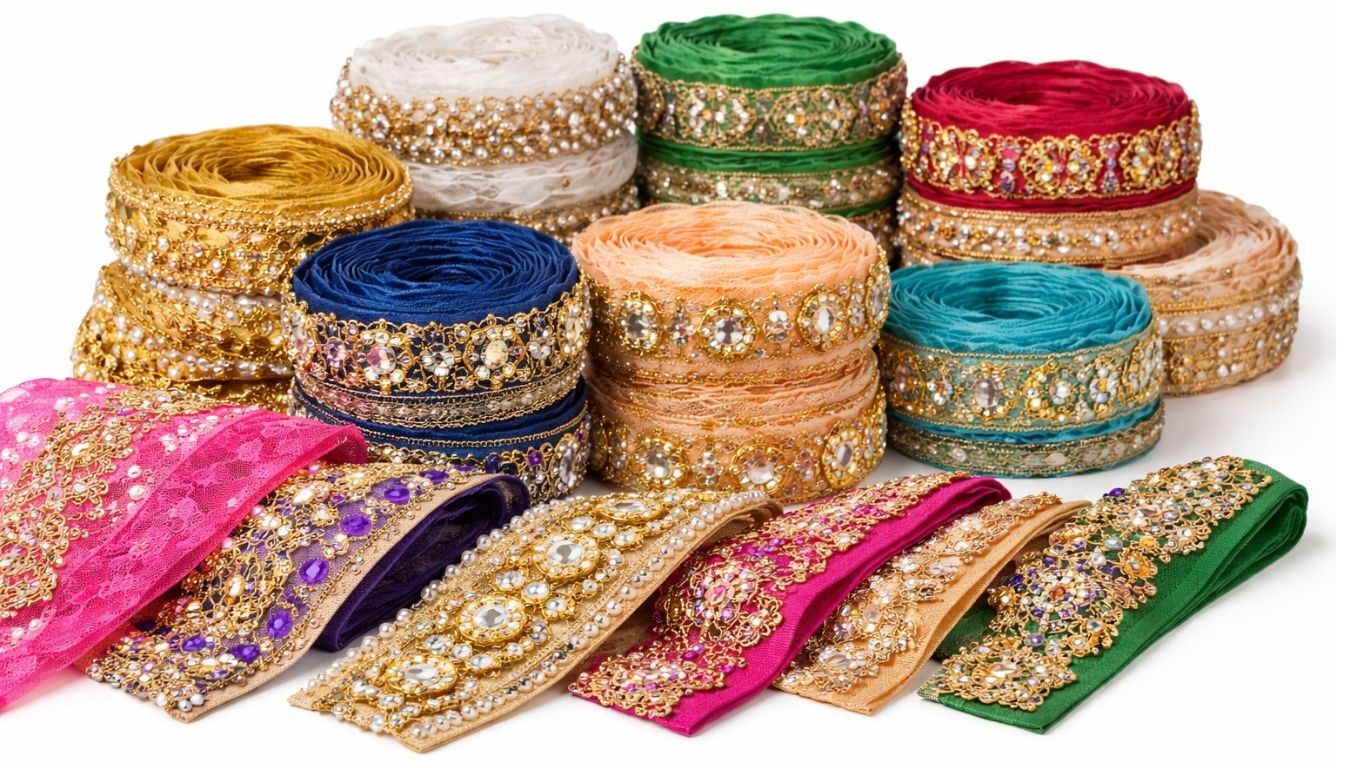
Lace
Lace is an important decorative material used in blouse work and Aari embroidery finishing. It helps add beauty, softness, style, and border value to blouse designs. Lace is often used in sleeve edges, blouse borders, neck patterns, back neck designs, and decorative finishing areas where the blouse needs a more complete and attractive look.
In blouse work, different lace types are used for different styles. Cotton lace gives a simple and neat finish, net lace gives a soft and stylish effect, and designer lace is useful when the blouse needs a richer and more attractive decorative appearance. Choosing the right lace can improve the full beauty of the blouse design.
Why Lace Is Important in Blouse Work
Lace is important because it helps improve the blouse border, edges, and decorative finish without needing heavy embroidery in every area. A simple blouse can look more attractive when the correct lace is used. Lace also helps complete the design and gives extra beauty to blouse sleeves, necklines, and finishing sections.
Choosing the Right Lace Type
Different lace types are useful for different blouse styles. Cotton lace is good for simple and neat finishing, net lace is useful for softer stylish designs, and designer lace is better for rich and decorative blouse work. The correct lace should match the overall style of the blouse.
- Cotton lace is useful for simple blouse finishing.
- Net lace helps create a stylish and soft look.
- Designer lace is useful for rich decorative work.
- Lace helps improve blouse borders and edges.
- The right lace adds more finishing beauty.
How Lace Changes the Final Look
Lace changes how the blouse looks after stitching is complete. Even if the embroidery is light, lace can make the blouse look more elegant and complete. The lace design, width, texture, and placement all help improve the final decorative value of the blouse.
- Lace improves the edge and border finish.
- It adds softness and style to the design.
- Useful in both simple and rich blouse work.
- Can make the blouse look more complete.
- Designer lace gives a stronger decorative effect.
Types of Lace Used in Blouse Work
Below are the important lace types commonly used in blouse making and Aari work finishing. Each lace type gives a different style and decorative effect to the blouse.
Cotton Lace
Cotton lace is useful for simple and neat blouse finishing. It is often used in blouse edges, sleeves, and borders where the design needs a soft and clean decorative touch.
Net Lace
Net lace is useful when the blouse needs a soft and stylish decorative finish. It gives a lighter visual effect and is often used in modern and elegant blouse styles.
Designer Lace
Designer lace is used for more rich and attractive blouse work. It is useful in designer, festive, and premium blouse styles where the finishing should look more decorative.
How Lace Helps in Blouse Design
Lace helps improve blouse finishing in different ways. Some lace types are useful for simple neat borders, while others are better for stylish or rich decorative finishing.
Neat Border Finish
Cotton lace is useful for neat border finishing in blouse sleeves, blouse edges, and simple decorative lines.
Soft Stylish Look
Net lace is useful for adding a soft and stylish effect to modern blouse work and elegant finishing areas.
Rich Decorative Value
Designer lace is useful when the blouse needs richer decorative value and stronger visual finishing.
Improves Blouse Edges
Lace is useful in improving blouse edge areas and helping the design look more complete after stitching.
Useful in Many Blouse Styles
Lace can be used in simple, stylish, festive, and designer blouse styles depending on the lace type chosen.
Better Final Finishing
Good lace selection helps improve the final finishing of the blouse and makes the full design look more polished.
Simple Guide to Lace Types
The table below gives a simple understanding of the important lace types used in blouse work and how they help improve the final design.
| Lace Type | Main Quality | Look | Best For |
|---|---|---|---|
| Cotton Lace | Simple and neat | Clean border finish | Blouse edges and sleeves |
| Net Lace | Soft and stylish | Light elegant effect | Modern blouse styles |
| Designer Lace | Rich decorative finish | Attractive premium look | Festive and designer blouses |
Where Lace Is Useful in Blouse Work
Lace is useful in many blouse-making situations where the design needs better border finishing, soft decoration, or a richer final decorative effect.
Blouse Border Finishing
Lace is very useful in blouse border finishing where the design needs a cleaner and more attractive edge.
Sleeve and Neckline Decoration
Lace can be used in sleeve and neckline areas to make the blouse look more elegant and complete.
Stylish Modern Blouses
Net lace is useful in stylish modern blouses where the finish should look softer and lighter.
Festive and Designer Work
Designer lace is useful in festive and designer blouse styles where the finishing should look richer and more decorative.
How to Choose the Right Lace
To choose the right lace, first check the blouse style and final finishing needed. If the blouse needs simple neat finishing, cotton lace may be useful. If it needs a softer and stylish effect, net lace can help. If the blouse should look richer and more decorative, designer lace is a better option.
The blouse design, lace width, decorative value, and final appearance should all be considered before selecting the lace.
Why Lace Selection Matters
In blouse work, lace selection matters because it changes the full finishing of the design. Even if the blouse is stitched well, the wrong lace may reduce the final look. The correct lace helps the blouse look more balanced, more complete, and more attractive in its final presentation.
Good lace selection helps improve style, border beauty, finishing quality, and overall blouse design value.
Frequently Asked Questions About Lace
These common questions can help users understand lace types used in blouse work and how they improve the final decorative finish.
Why is lace used in blouse work?
What is cotton lace used for?
Why is net lace useful in modern blouses?
What is designer lace used for?
How does lace improve the final blouse look?
Learn More Aari Work Materials
Lace is an important decorative material in blouse work because it improves borders, edges, and finishing beauty. Learning the right lace type can help create better blouse designs and more attractive final results.
Lace is a beautiful and delicate fabric used in many types of clothing and decorations. It is known for its soft, open design and detailed patterns. Lace is widely used in fashion, especially in blouses, sarees, dresses, and bridal wear. It adds elegance and a rich look to any outfit. Below is a complete guide in simple English covering colours, sizes, variations, usage, and steps.
What is Lace?
- Lace is a decorative fabric made with yarn or thread
- It has open spaces and patterns like flowers, leaves, or shapes
- It can be made by hand or machine
- Used mostly for decoration, not for full coverage
- Gives a soft, feminine, and stylish look
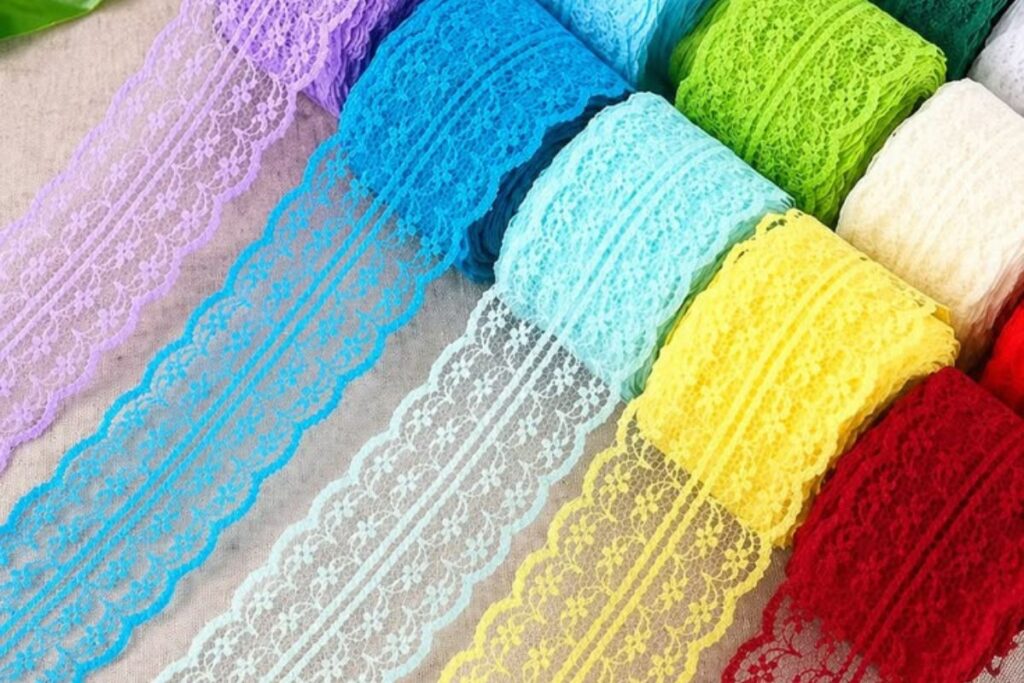
Types of Lace
- Cotton Lace – soft and breathable, good for daily wear
- Silk Lace – smooth and shiny, used in bridal outfits
- Net Lace – light and transparent, very common in blouses
- Embroidered Lace – lace with thread work designs
- Crochet Lace – handmade with thick thread
- Stretch Lace – flexible and comfortable for fitting clothes
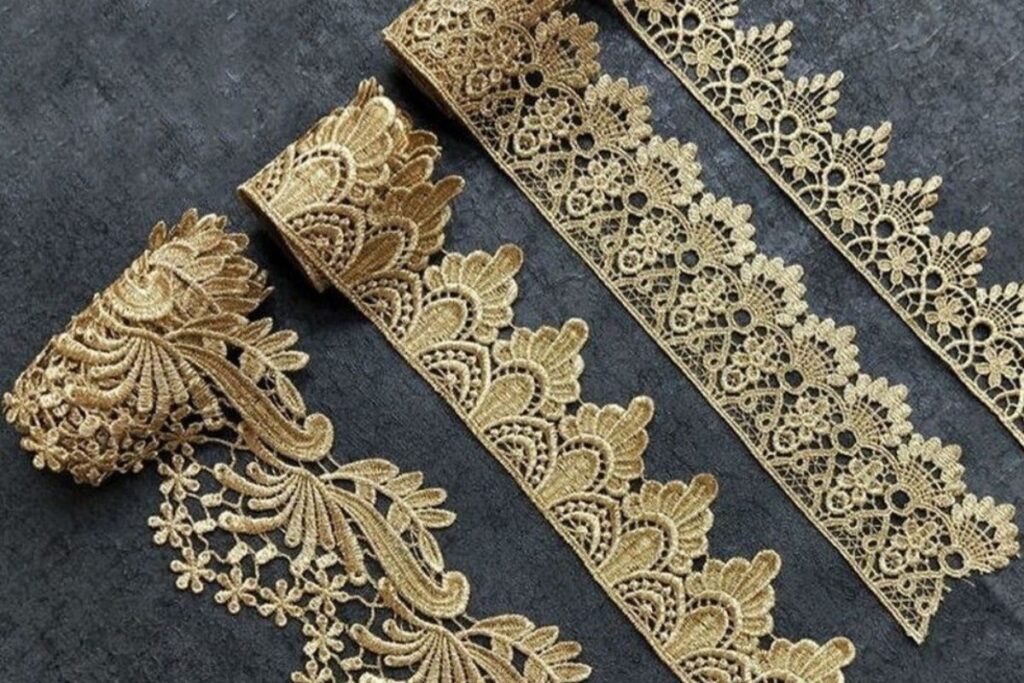
- Metallic Lace – has gold or silver thread for festive wear
Lace Colours
Lace comes in many colours, depending on the design and usage.
- White – classic and most popular for bridal wear
- Cream – soft and elegant, used in traditional outfits
- Black – bold and stylish, used in party wear
- Red – rich and attractive, perfect for weddings
- Pink – soft and feminine
- Blue – modern and cool tone
- Green – fresh and unique
- Gold – grand and festive look
- Silver – shiny and stylish
- Pastel shades – light colours like peach, mint, lavender
Lace Sizes
Lace is available in different widths and lengths.
- Narrow lace – 1 to 2 inches, used for borders
- Medium lace – 2 to 5 inches, used in sleeves and neck designs
- Wide lace – 5 inches and above, used in full designs
- Rolls – lace is sold in rolls of different lengths
- Custom cut – can be cut as per requirement
Colour Selection Tips
- Choose light colours for daytime wear
- Dark colours are better for evening or parties
- Bridal wear mostly uses white, cream, red, or gold
- Match lace colour with blouse or saree fabric
- Use contrast colours for a stylish look
Size Usage
- Small lace for simple finishing
- Medium lace for blouse designs
- Wide lace for heavy work or bridal wear
- Layering different sizes gives a rich look
Lace Variations in Design
Lace comes in many patterns and styles.
- Floral patterns – flowers and leaves
- Geometric patterns – shapes and lines
- Scalloped edges – curved borders
- Straight edges – simple and neat
- Beaded lace – decorated with beads
- Stone work lace – includes stones or crystals
- Thread work lace – heavy embroidery style
- Cutwork lace – detailed cut designs
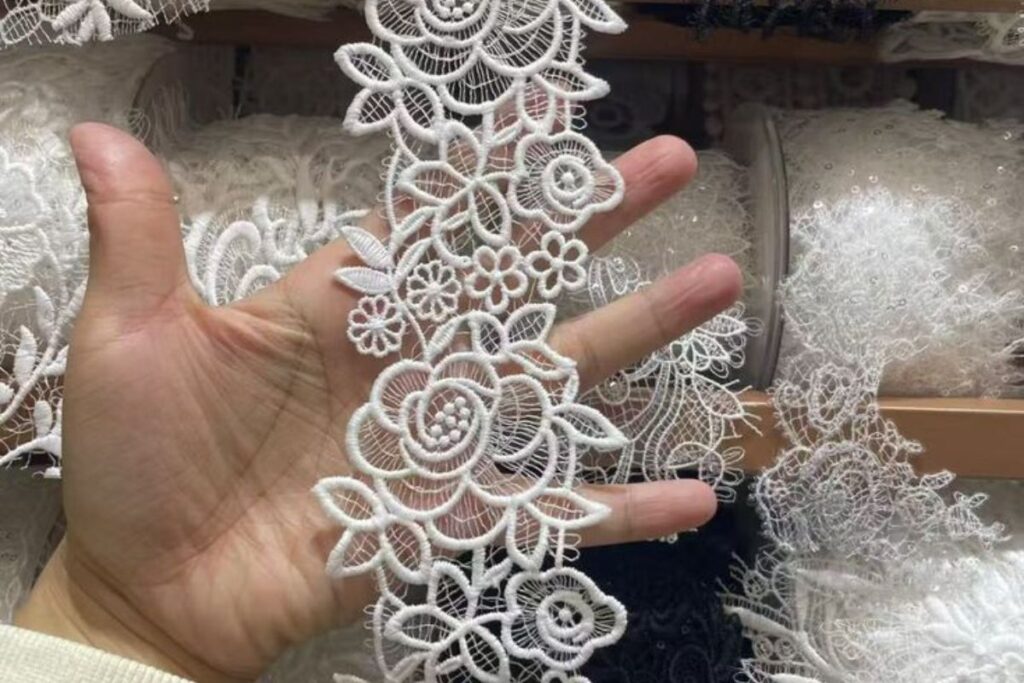
Usage of Lace
Lace is widely used in many areas.
In Clothing
Blouses – sleeves, neck, back designs
Sarees – borders and pallu
Dresses – full or partial design
Skirts – layered look
Dupattas – edge decoration
Nightwear – soft lace for comfort
In Bridal Wear
Wedding gowns
Bridal blouses
Veils
Lehenga designs
In Accessories
Hairbands
Handbags
Footwear decoration
In Home Decoration
Curtains
Table covers
Cushion covers
Texture and Feel
- Soft lace – comfortable for skin
- Rough lace – used for decoration only
- Stretch lace – easy to wear and move
- Lightweight lace – best for summer wear
- Heavy lace – used in bridal and party outfits
Lace in Blouse Design
- Used in sleeves for stylish look
- Back neck designs with lace
- Lace borders for simple blouses
- Full lace blouse for modern style
- Mixed with aari work for rich look
Steps to Attach Lace
Here are simple steps to use lace in clothing.
Step 1: Select Lace
Choose design, colour, and size
Match with fabric
Step 2: Measure Area
Measure where lace will be used
Cut lace accordingly
Step 3: Prepare Fabric
Keep fabric clean and ironed
Mark the placement
Step 4: Position Lace
Place lace carefully on fabric
Check alignment
Step 5: Pin or Hold
Use pins or temporary stitch
Make sure it stays in place
Step 6: Stitching
Use sewing machine or hand stitch
Stitch slowly for neat finish
Step 7: Finishing
Trim extra edges
Check for loose threads
Benefits of Using Lace
- Adds beauty and elegance
- Lightweight and breathable
- Available in many designs
- Easy to mix with other fabrics
- Suitable for all age groups
- Works for both simple and heavy designs
Matching Lace with Fabric
- Cotton fabric – use cotton lace
- Silk fabric – use silk or metallic lace
- Net fabric – use embroidered lace
- Velvet fabric – use heavy lace
- Georgette – use light lace
Common Mistakes to Avoid
- Choosing wrong size lace
- Using heavy lace on light fabric
- Poor stitching alignment
- Not measuring properly
- Using wrong colour combination
Lace Trends
- Pastel lace for modern fashion
- Heavy lace for bridal wear
- Mixed lace and embroidery designs
- Layered lace styles
- Minimal lace for simple looks
Where Lace is Popular
- Bridal collections
- Designer blouses
- Party wear outfits
- Fashion boutiques
- Online clothing stores
Custom Lace Designs
- Can be made as per design requirement
- Custom colours available
- Unique patterns for exclusive outfits
- Used by designers for special collections
Lace and Aari Work Combination
- Lace adds softness to aari work
- Aari work adds richness to lace
- Perfect for bridal blouses
- Used in sleeves and back neck
- Gives traditional and modern mix
Lace for Beginners
- Start with simple designs
- Use medium size lace
- Practice stitching
- Try small projects first
- Learn pattern placement
Choosing the Right Lace
- Check quality of thread
- Look for neat patterns
- Avoid damaged or loose lace
- Select based on occasion
- Consider comfort and style